
When Your Calling Doesn’t Fit Other People’s Labels
Sometimes what you are called to do is unconventional, and other people will not have a label for it.
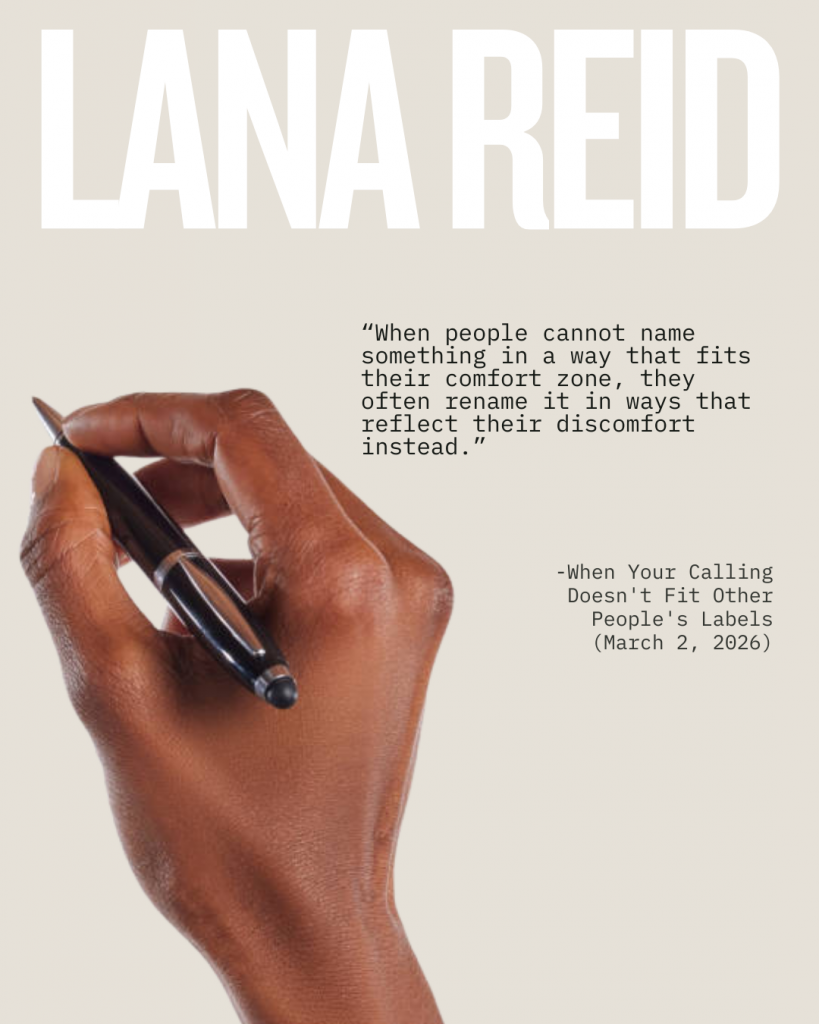
That absence of a label is rarely neutral. When people cannot name something in a way that fits their comfort zone, they often rename it in ways that reflect their discomfort instead. They assign motives you never claimed. They reduce your purpose to whatever narrow frame feels safest to them. They make your calling smaller because unfamiliar work often makes people uneasy.
I founded Conversations in Color on one foundational idea: conversation. Not performance. Not spectacle. Conversation.
That work began with something I had always felt naturally drawn to, sitting down and talking with Black men. What started as a podcast eventually became the Black Men Matter series of The Male Perspective, a body of work that has now spanned more than seven years of episodes, stories, and lived perspectives.
For as long as I can remember, that space has felt both comfortable and purposeful to me. It is where I have listened, questioned, and documented voices that public narratives too often flatten. It is also where I have faced some of the most pointed criticism of my life, not because the work lacked value, but because many people could only interpret the optics of it through one or two narrow boxes shaped by their own assumptions.
That kind of pressure does something to you. It can make you withdraw. It can make you question yourself. It can tempt you to squeeze into whatever version of yourself makes others more comfortable with your presence.
But I kept returning to one question: if I had done that, what would have been lost?
Would there now be a growing historical archive of Black male voices for future generations to encounter?
Would there be hundreds of documented conversations showing Black men not only through struggle, but through intellect, leadership, fatherhood, entrepreneurship, creativity, and reflection?
Would future viewers be able to see Black men in the twenty-first century, educators, business owners, activists, fathers, husbands, brothers, speaking in their own words rather than always being interpreted through someone else’s lens?
That archive exists because I did not stop when others lacked the language for what I was building.
Would it be easier to do work that looks more familiar to the masses? Of course. Familiarity creates fewer questions and less resistance. It would have allowed me to fit in. But ease and purpose are not always aligned.
History is consistent on that point.
Nikola Tesla was viewed as eccentric before his ideas became foundational to modern life. Jean-Michel Basquiat was overlooked for years before his work helped redefine contemporary art. Even human flight was once dismissed as impossible until someone refused to accept that impossibility as final.
Innovation rarely begins inside public comfort. Purpose rarely arrives wearing a familiar uniform.
Sometimes the most difficult part of the work is not doing it. It is remaining faithful to it while others insist on misunderstanding it.
Not everything meaningful arrives in a form people immediately know how to applaud or feel comfortable with.
Some work arrives quietly. Some work arrives differently. Some work arrives without permission.
And sometimes the only responsible thing to do is keep building according to your calling, not according to what other people choose to call you.