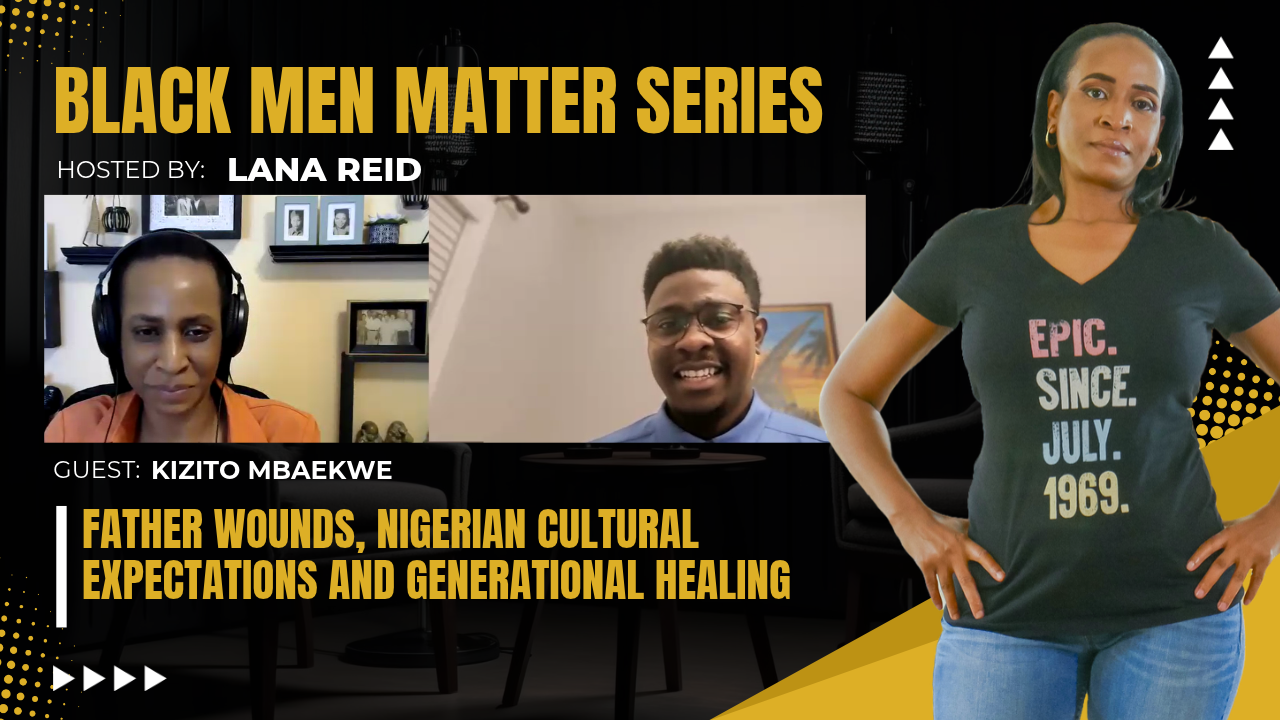
Father Wounds, Nigerian Cultural Expectations and Generational Healing | Kizito Mbaekwe
By Lana Reid | October 28, 2026
Publication Information
| Interviewee | Kizito Mbaekwe |
|---|---|
| Interviewer | Lana Reid |
| Collection | The Male Perspective: Black Men Matter Oral History Collection |
| Interview No. | 237 |
| Publisher | Conversations in Color |
| Rights Holder | Conversations in Color (501(c)(3)) |
| Original Format | Recorded Video Interview |
| Language | English |
| Original Air Date | October 28, 2026 |
| Publication Date | October 2026 |
| Location | Virtual Interview |
| DOI | https://doi.org/10.5281/zenodo.23741618 |
As part of the Black Men Matter Series, Lana Reid sits down with Kizito Mbaekwe, MSN, APRN, PMHNP-BC, author of Better Than My Father and founder of Marenova Psychiatry & Wellness, for a conversation about fatherhood, Nigerian cultural expectations, mental health, and generational healing. Growing up in Nigeria, Kizito experienced a family environment where education, discipline, responsibility, and achievement were emphasized, while love was often communicated through provision rather than emotional affection and affirmation. Drawing from his memoir and his work as a psychiatric mental health nurse practitioner, he reflects on his relationship with his father, his journey to the United States, and how examining inherited emotional patterns has influenced the way he approaches marriage, parenting, and his own personal growth.
In this episode of The Male Perspective, Kizito Mbaekwe explores the complicated relationship between cultural expectations, fatherhood, emotional expression, and the decisions individuals make about what they carry from one generation into the next.
Growing up in Nigeria, Kizito was surrounded by expectations that placed considerable importance on education, discipline, family responsibility, and success. These expectations helped shape his understanding of what was required of him as a young man and what it meant to prepare for adulthood.
But alongside those lessons were other experiences that would take on greater meaning as he grew older.
Drawing from his memoir, Better Than My Father, Kizito reflects on his relationship with his father and the complexities of growing up in a household where love was often demonstrated through providing for the family, maintaining discipline, and fulfilling parental responsibilities rather than through verbal affection or emotional affirmation.
The conversation examines how a parent can fulfill important responsibilities while a child may still desire a different kind of emotional connection.
For Kizito, understanding that distinction became part of his own personal evolution. As he began examining the experiences that shaped him, he also began considering how those lessons influenced his expectations, relationships, and understanding of fatherhood.
One of the central themes of the discussion is the difference between recognizing what previous generations provided and acknowledging what may have been missing emotionally.
Kizito’s reflections do not require dismissing his Nigerian upbringing or the cultural values that influenced his family. Instead, he explores how a person can appreciate the importance of discipline, education, perseverance, and responsibility while also questioning whether certain emotional patterns should continue unchanged.
That examination has become especially meaningful in his own life as a husband and father.
Kizito discusses how his experiences growing up have influenced his desire to become more emotionally present within his family. Rather than simply repeating the parenting behaviors he experienced, he reflects on the importance of intentional growth and developing a relationship with his children that includes greater emotional connection and affirmation.
The conversation also follows Kizito’s journey from Nigeria to the United States.
He shares the challenges of pursuing opportunities in a new country and the path that eventually led him into the mental health profession. His experiences navigating different cultural environments provide another perspective on how expectations surrounding achievement, identity, and personal responsibility can influence a person’s decisions and development.
Today, as a psychiatric mental health nurse practitioner and founder of Marenova Psychiatry & Wellness, Kizito brings both professional knowledge and personal experience to conversations about emotional well-being.
He discusses the stigma surrounding mental health in African communities and some of the cultural attitudes that can make it difficult for individuals to acknowledge emotional struggles or seek professional support.
When strength is closely associated with endurance, achievement, and fulfilling responsibilities, emotional distress may not always receive the same attention as other aspects of a person’s well-being. Kizito examines why recognizing those attitudes is important, particularly when they discourage people from discussing what they are experiencing.
The discussion also considers how emotional patterns can move through generations without being consciously examined.
Children learn about relationships, affection, discipline, conflict, and responsibility through what they experience within their families. As those children become adults and parents themselves, they may reproduce familiar behaviors even when they have never intentionally decided that those behaviors reflect the kind of relationships they want to create.
For Kizito, breaking a generational cycle begins with recognizing those inherited patterns and making intentional decisions about which ones should continue.
This does not necessarily mean rejecting one’s parents, cultural heritage, or family traditions. Instead, it can involve understanding the circumstances and expectations that shaped previous generations while recognizing that personal growth may require a different approach.
Through Better Than My Father, Kizito explores that process of reflection and evolution, including how his relationship with his father influenced the man he has become and the father he continues striving to be.
Ultimately, this episode of The Male Perspective offers a conversation about honoring cultural heritage without assuming that every inherited expectation or emotional pattern must remain unchanged.
Kizito Mbaekwe’s story demonstrates how examining the past can become part of building a different future—one in which discipline and responsibility can coexist with emotional openness, affection, and a more intentional approach to fatherhood.
About the Guest
Kizito Mbaekwe, MSN, APRN, PMHNP-BC, is an author, psychiatric mental health nurse practitioner, and founder of Marenova Psychiatry & Wellness.
Originally from Nigeria, Kizito draws from his personal experiences, cultural upbringing, and professional work in mental health to explore the relationships between family expectations, emotional well-being, fatherhood, and personal development.
He is the author of Better Than My Father, a memoir examining his relationship with his father, the cultural expectations that shaped his upbringing, and his journey toward personal growth and becoming a more emotionally present husband and father.
Through his work in mental health, Kizito also addresses the importance of recognizing emotional patterns, challenging stigma surrounding mental health, and encouraging individuals to seek support when needed.
𝗙𝗼𝗿 𝗺𝗼𝗿𝗲 𝗶𝗻𝗳𝗼𝗿𝗺𝗮𝘁𝗶𝗼𝗻 𝗼𝗻 𝗞𝗶𝘇𝗶𝘁𝗼 𝗠𝗯𝗮𝗲𝗸𝘄𝗲:
https://www.linkedin.com/in/kizito-mbaekwe-777517b3
https://marenovawellness.com/
https://www.amazon.com/dp/B0GDSTLVNJ
https://www.instagram.com/marenovawellness/
About the Series
This episode is part of the Black Men Matter Series, highlighting the voices and lived experiences of Black men across professions, communities, backgrounds, and generations while creating space for them to tell their stories in their own words.
About the Host & Organization
The Male Perspective is hosted by Lana Reid, founder of Conversations in Color, a nonprofit 501(c)(3) grassroots organization dedicated to providing uplifting and community-building spaces of dialogue for Black voices.
Conversations in Color’s Current Initiatives
THE MALE PERSPECTIVE
The purpose of The Male Perspective is to dispel stereotypes and increase awareness of the experiences of Black men through open discussions, thought-provoking interviews, and the sharing of personal experiences that highlight the diversity and depth of the Black male experience.
SISTAS REBUILDING SISTERHOOD
Sistas Rebuilding Sisterhood is an intergenerational community of Black women who come together for relaxed, non-judgmental gatherings to exchange ideas, share experiences, and collaborate in a collective effort to improve the quality of sisterhood interactions in everyday life.
TAPESTRY OF BLACK VOICES AWARDS
The Tapestry of Black Voices Awards honors local communities and showcases the creativity, brilliance, and lived experiences of Black voices across the United States.