The Ginger Ale Has No Ginger In It, And For Black People, That’s Not the Point
On healing, memory, and the medicine passed down in Black households
I have been a vegetarian for over 25 years. I have not brought white rice, white sugar, or white flour into my home in decades because I know what the refining process strips away. I exercise five times a week. By most measures, I am someone who pays close attention to what goes into my body and why.
So it might surprise you to learn what you would find if you opened my refrigerator right now: a few small bottles of ginger ale, tucked neatly into the door.
I know there is not a drop of actual ginger in those bottles. I know there is no medicinal property waiting inside. I have read the labels. I understand the ingredients. And still, they are there.
Because I am a Black person who grew up in a community where ginger ale was the answer to nearly every ailment imaginable: the flu, a skinned knee, constipation, a headache. Whatever you brought to the adults in your life, ginger ale was likely part of what came back to you.
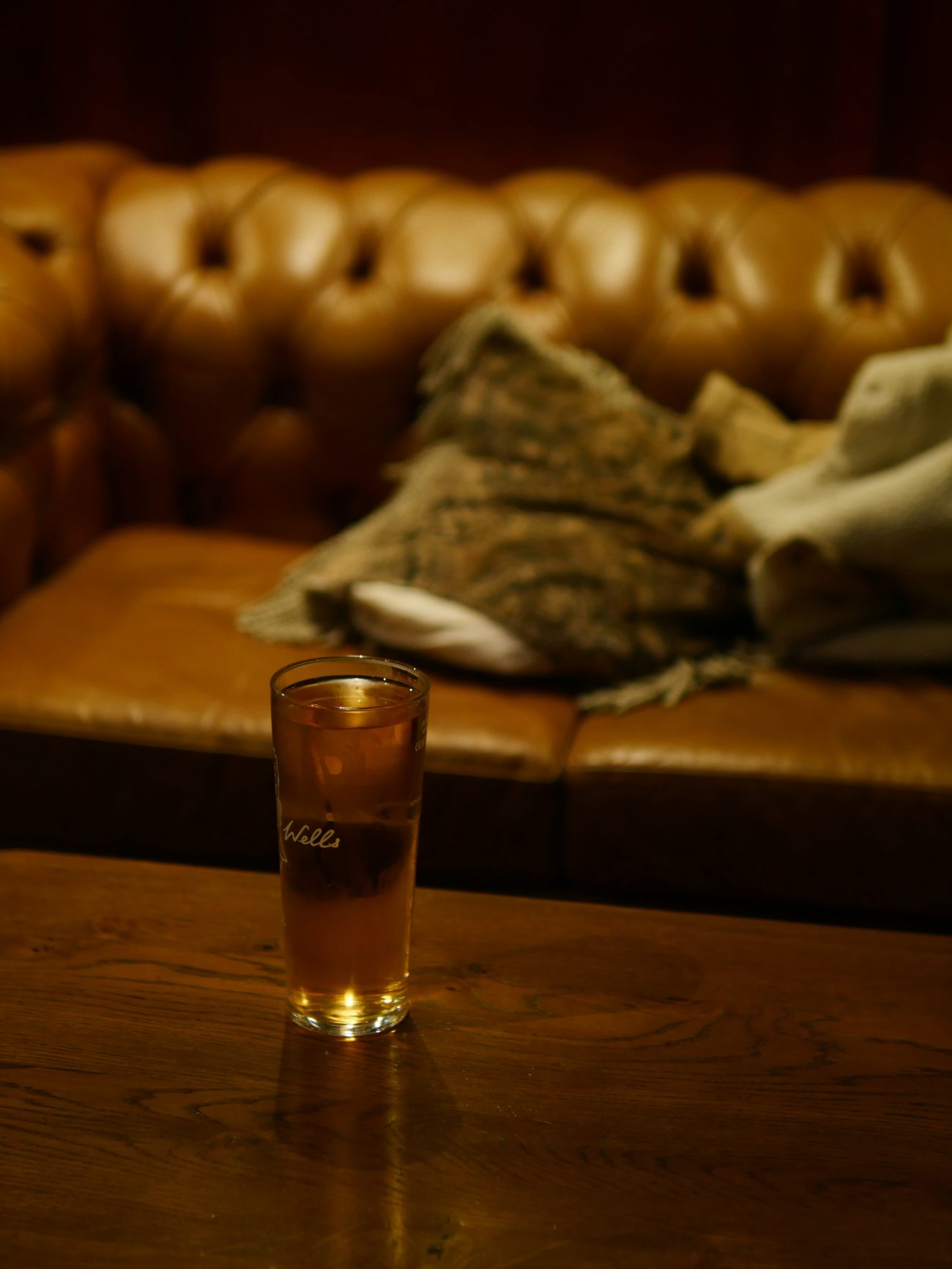
What I keep in my refrigerator is not a cure. I hold no illusions about that. But on the days when I am a little under the weather, something happens when I reach for one of those bottles. A memory surfaces, maybe one of my aunts, a living room couch, a blanket pulled up to my chin, and The Price Is Right playing on a television set I can still picture clearly. She handed me a cold glass without much ceremony, the way people who love you often do. She let me lay on her couch for the afternoon.
That memory, more than the ginger ale itself, still makes me feel better.
There is no superstition on my part. No ignorance. It is something researchers and cultural historians have increasingly tried to name and understand: the weight of embodied memory, the way care and comfort become encoded not just in our minds but in the sensory cues attached to them. A smell. A sound. The specific fizz of a particular drink.
More people are beginning to talk about intergenerational memory in Black communities, the idea that trauma, wisdom, and survival strategies leave marks that are passed down not only through story but through the body itself. Scientists have studied epigenetic inheritance, the way stress and resilience can alter gene expression across generations. Historians and cultural theorists have long argued that Black communal practices carry a kind of encoded knowledge shaped by centuries of navigating adversity with limited resources and enormous creativity.
Perhaps the ginger ale was always a vessel for something larger than its ingredients.
What it carried, and still carries, is the act of being loved and comforted in discomfort. The presence of someone willing to sit with you, to offer something, to transform an ordinary afternoon into a moment of care. The drink was only a supporting character. The communal bond was the medicine.
There is a particular kind of healing that does not show up in clinical trials. It lives in the rituals Black families developed across generations, often in the absence of accessible healthcare, often in spaces where institutional medicine failed them or refused them entirely. Herbal teas, castor oil, salves passed down without written recipes, and yes, ginger ale. Not all of these treatments cured disease, but they organized Black communal care. They gave someone a role: the one who brings the drink, who tucks in the blanket, who stays, and in doing so, creates an opportunity to bond through discomfort.
What is being transmitted in those moments is not pharmaceutical. It is relational. It is the knowledge that someone in your community sees your suffering and will not leave you alone in it.
My refrigerator, then, is not a contradiction of my values about personal health. It is an extension of them.
I believe in evidence. I believe in nutrition. I believe the body deserves to be treated with intention. And I also believe healing is not only biochemical, that comfort is real, that memory is medicine of a kind, and that what my aunt gave me on that couch was something no ingredient list could fully capture.
The ginger ale has no ginger in it.
But it has her in it. It has the couch, and the blanket, and the afternoon, and the specific quality of being loved by someone who had probably been loved the same way herself.
So when you see Black people handing each other a ginger ale in hard times, you are watching something deeper than a soft drink myth. You are watching a community remind one of its own: you are seen, you are loved, and you will not go through this alone.
That is the tradition in the bottle. That is what has always been passed down.