
Simply Because It Is There
When I was eight years old, my parents gave me my first diary for Christmas. It was the first of many I would fill over the years, writing faithfully into my early twenties. After that, they were stacked away in boxes in the garage, largely forgotten.
Recently, I pulled them out and started thumbing through the pages.
The very first entry read:
“To anyone who finds this diary, do not publish it.”
I had to laugh. How times have changed. Today, many of us voluntarily share our most intimate thoughts on social media and feel disappointed when strangers scroll past without clicking like, commenting, or resharing these little pieces of our soul.
A few diaries later, I came across another entry:
“I want to leave and then I don’t want to leave. I want to leave because it’s boring in Okinawa now. I don’t want to leave because I’ll be leaving all my new friends and going to a new school scares me.”
I grew up a military brat. Every few years meant a new country, a new school, new customs, and a completely new environment. Change is difficult for most people, and it was certainly difficult for my younger self. My adult self, however, is deeply grateful for those experiences.
Moving so often taught me something that many people never learn until much later in life: flexibility is a survival skill. It showed me how dangerous it can be to become too comfortable, too attached to routine, or too unwilling to venture beyond familiar territory.
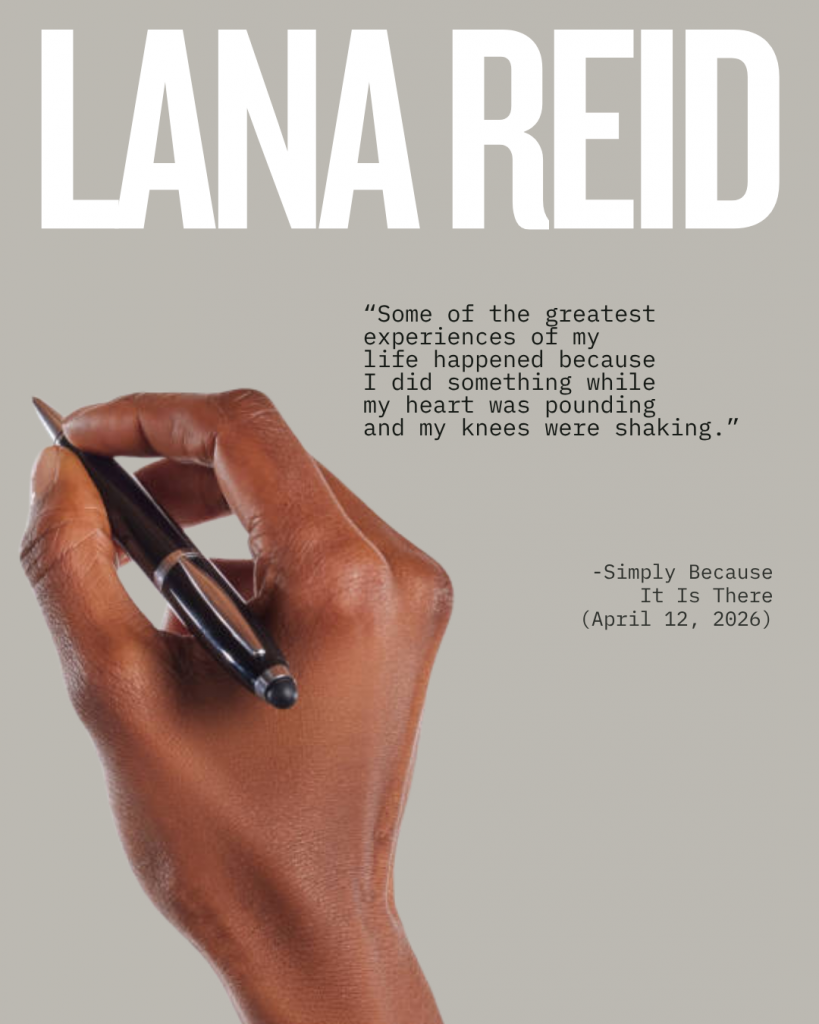
Some of the greatest experiences of my life happened because I did something while my heart was pounding and my knees were shaking. The skills I am most proud of, the places I have visited and never forgotten, and the new people who changed my life all came from stepping outside what felt safe.
At the same time, some of my most painful experiences came from trying to bring people along on new journeys, only to discover they were quietly pulling me back toward their comfort zone. There is a particular kind of heartbreak that comes from outgrowing a shared space with someone. You care deeply about them and value the history you share, but eventually you realize that staying where they are means abandoning your own growth. At some point, you have to choose between preserving a bond and continuing your evolution.
For me, that choice often reveals itself in small, quiet moments.
Sometimes I will say to someone:
“We should go to Luxembourg.”
And they will respond:
“Why would we go to Luxembourg?”
They did not answer with “What time does the flight leave?” And somewhere quietly in the back of my mind, I think: simply because it is there.
That moment tells me something important. It is not really about Luxembourg. It is about curiosity. It is about possibility. It is about whether someone approaches life by asking what might be learned if they go, or by immediately listing reasons to stay home.
There is no judgment in it. Not everyone is wired to chase the unfamiliar or constantly push beyond their comfort zone, and that is perfectly okay. But I have learned to pay attention to those subtle differences in thinking. They often reveal whether our paths are moving in the same direction.
The eight-year-old who begged strangers not to publish her diary had no idea those pages would one day become a record of her own evolution. Yet she was already wrestling with the questions that continue to shape a life: questions about belonging, questions about leaving, questions about what frightens us, and questions about what we gain when we move forward and what we risk losing when we stay still.
The answer, I have found, is usually on the other side of stretching myself.
So go to Luxembourg.
Not because someone told you to.
Not because it is practical.
Not because you have every detail figured out.
Go simply because it is there.